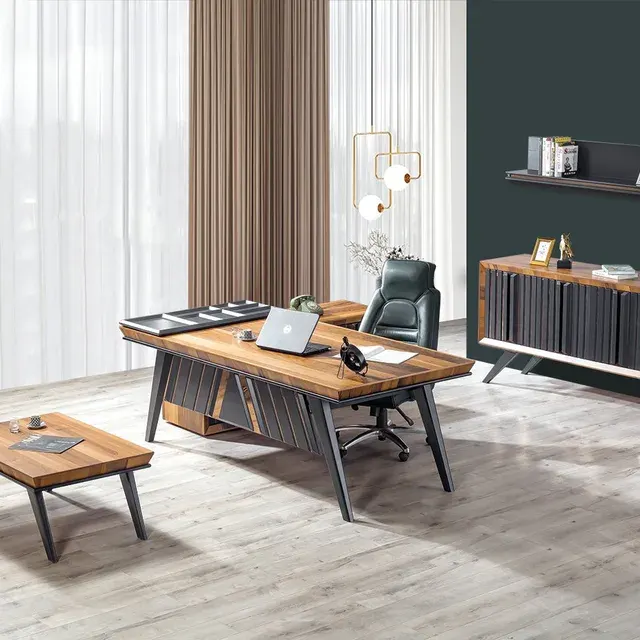

What to Consider When Choosing a Desk?

The desk is one of the most important pieces of furniture that directly affects productivity, both in home offices and in corporate workspaces. The right desk choice both ensures an ergonomic posture and increases work motivation. However, choices often made by looking only at appearance or price can lead to an uncomfortable and unproductive workspace in the long run. In this article, we will cover in detail all the criteria to consider when choosing the ideal desk.
Determining the Intended Use of the Desk
The first and most important step is to clarify what the desk will be used for. Will it be used in the office or at home? Is the work mainly computer-based or writing-focused? When these questions are answered clearly, it becomes easier to determine the right desk type.
- For computer-focused work, desks with cable pass-through holes, monitor risers, or keyboard drawers should be preferred.
- For tasks such as writing, drawing, or planning, flat-surfaced desks offering a larger surface area are ideal.
- In desks dedicated to meeting and executive use, elegance, storage space, and design come to the fore.
The Ergonomic Features of the Desk
The most important feature of a desk is that it is ergonomic. Thanks to correct ergonomics, back, neck, and lower back pain can be prevented. There are some standard measurements to consider for this:
- Height: An average desk height should be in the 72-75 cm range. Desks that are too short or too tall can strain the user.
- Knee clearance: There should be at least 60 cm of depth and 70 cm of width under the desk so that the user can sit comfortably.
- Surface area: A surface of at least 120x60 cm meets the basic needs for work. However, this measurement can be increased for those working with multiple screens or equipment.
Material Quality and Durability
One of the most critical factors determining the service life of desks is the material they are made of. Quality and sturdy materials should be preferred, especially for long-term use.
The most common desk materials:
- Laminated MDF: Economical and durable. It offers many color and pattern options.
- Solid Wood: Offers a stylish and natural look. Its price is high, but it is long-lasting.
- Metal Legs + Wooden Top: Frequently preferred in modern offices. Provides stability.
- Glass-Top Desks: Although they offer an aesthetic look, they are sensitive to scratches and fingerprints.
Storage and Additional Functions
In modern desks, not only the surface but also additional functions are important. Especially to reduce clutter and use the space efficiently, the following additional elements can be considered:
- Drawers and shelf systems: Allow materials such as pens, documents, and notebooks to be stored.
- Cable management holes: Eliminate the cable clutter on the desktop.
- Mobile pedestals: Functionality increases thanks to movable drawer systems that match the desk.
- Adjustable height: In some modern desks, the height can be adjusted with an electric or manual system. It offers the possibility of working standing up.
Harmony with the Office Space and Decoration
In desk selection, not only ergonomics and function but also visual harmony is important. Choosing a desk that matches the overall decoration style of the office makes the space look professional and aesthetic.
- In modern offices, minimal desks with metal details can be preferred.
- In classic offices, solid wood and dark tones come to the fore.
- In small spaces, white and light-colored desks make the area look larger.
It is also important that the desk is in visual harmony with the other furniture purchased with it, such as chairs, cabinets, and bookcases.
Budget and Price-Performance Balance
Prices for desks span a wide range. Although cheap products may seem attractive in the short term, they can fall short in terms of ergonomics and durability. For this reason, when setting your budget, not only the price but also longevity and functions should be evaluated.
To choose a desk with a high price/performance ratio:
- Prefer products containing first-class MDF or solid wood material.
- Prefer brands that offer at least a 2-year warranty.
- Review the return and assembly policies.
Desk Selection by User Type
The ideal desk may be different for each type of worker. That is why, when buying a desk, it is important to go for the model that suits your own needs.
- Executives: Should prefer prestigious designs with a large surface and storage space.
- Graphic designers: Should prefer a desk with a large drawing area, a flat surface, and good light.
- Those working from home: Compact but multifunctional desks are suitable for using the space efficiently.
Assembly and Portability of the Desk
Especially in home offices or in businesses that relocate frequently, the assembly and portability of the desk is also an important criterion. Heavy desks with fixed systems can create difficulties in terms of moving and installation. For this reason:
- Easy-to-assemble screw-based systems should be preferred.
- Desks with a modular structure are more advantageous in terms of portability.
The Right Desk, a More Productive Working Life
Choosing a desk is not just a furniture preference; it is an investment that directly affects productivity, comfort, and aesthetics. A choice made by considering the factors above, such as ergonomics, material quality, functionality, design, and suitability for the user, will provide productive use for many years.
Think of your office not just as a workspace but also as a living space that reflects you. For this reason, when choosing your desk, pay attention not only to its price but also to the value it provides, its comfort, and how well it suits your style.
Looking for the right furniture for your office?
Browse the full catalogue and add your favourites to your quote list.
Explore Products