
Choosing Waste Bins for Offices: A Zero Waste and Recycling Guide
Zero waste practice in offices is no longer voluntary but standard: separating waste at the source starts with planning waste bins in the right color and the right volume. In this guide we cover the color codes, the litre calculation by headcount, material choice for indoor spaces, and the correct placement of bins around the office, with concrete figures.
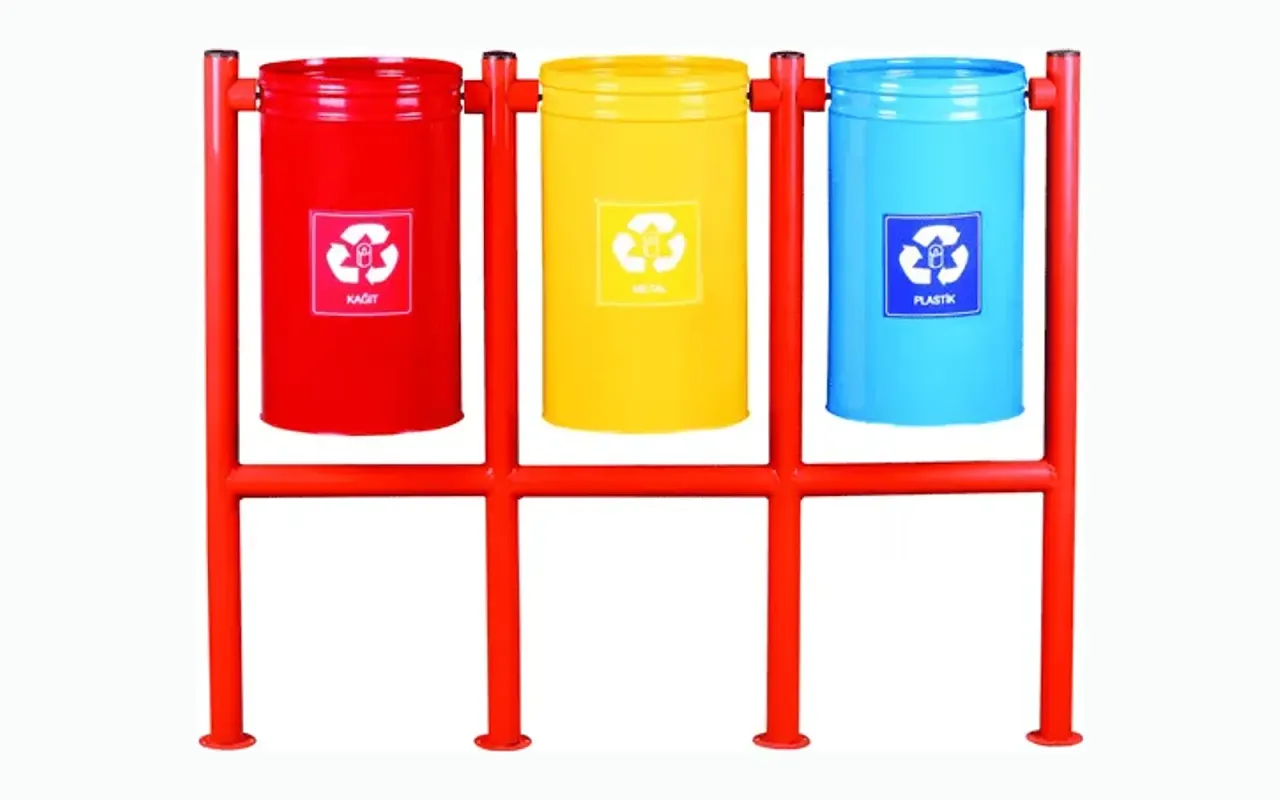
Zero Waste Color Codes
In Turkey's Zero Waste system, each waste type has a standard color; the bins used in an office are chosen according to these codes:
- Blue: paper and cardboard
- Yellow: plastic and plastic packaging
- Green: glass
- Grey: metal
- Brown: organic and plant-based waste
- Black: other non-recyclable waste
Batteries, toner, and electronic waste do not go into these bins; separate collection units are placed at the entrance or in a technical area for them.
Volume Calculation by Headcount
An office worker produces an average of 1-2 litres of waste per day, most of it paper and packaging. Bin volume is calculated from the lower limit if emptying is done daily, and from the upper limit if it is done every other day; half-empty giant bins waste space just as an overflowing bin does.
- At the desk: a small 5-10 litre bin is enough; if the separation target is high, desk bins are removed entirely and users are directed to a central station
- Area of 10-15 people: a separation station with 3-4 compartments of 25-40 litres each
- Kitchen and dining area: a pair made of a 40-60 litre organic bin and a packaging bin of the same volume
Indoor Material: Stainless Steel or Painted Metal?
Two main materials compete for the indoor waste bin. Stainless steel resists stains and knocks and wipes clean easily; it looks prestigious in the lobby and on the executive floor. Electrostatic powder-coated metal, on the other hand, can carry the color coding directly in the body color, making it the most practical solution for open offices and corridors; it also wins on budget.
Plastic bins do the job in kitchens and cleaning rooms thanks to their light weight and wet-area resistance; in representative areas, a metal body should be preferred. The lid type is also chosen by location: pedal lids in the kitchen, and open-top or slanted-lid models inside the office keep the daily flow fast.
Placement: Where Should the Bins Go?
The success of separation is directly tied to distance: the harder it is to walk to the bin, the more mixed waste grows.
- One separation station per 20-25 employees or at a natural crossing point on each floor; nobody should walk more than 15-20 meters to a bin
- A blue paper bin next to the printer and archive zone
- A brown organic and yellow packaging pair in the kitchen and dining area
- A battery and e-waste unit near the entrance
Using icon labels together with color on the bins visibly reduces separation errors; preparing the labels in two languages is good practice for international teams.
Consistency with the Office Concept
Although the waste bin is the last product remembered in most projects, it stands in plain sight in the lobby, the corridor, and on the meeting floor; metal bodies matching the furniture concept remove the cluttered look. Teams furnishing their office as a whole plan the waste bins in the same project as desks, cabinets, and reception furniture; at Fil Office these products are delivered with free transport within Istanbul, and you can see the models in the Ümraniye showroom.
Frequently Asked Questions
Which color is used for which waste in the Zero Waste system?
The standard coding is as follows: blue for paper and cardboard, yellow for plastic, green for glass, grey for metal, brown for organic waste, and black for other non-recyclable waste. Batteries and electronic waste are not thrown into these bins; they are collected in separate units.
How many litres of bin volume should be calculated per person in an office?
An average office worker produces 1-2 litres of waste per day. In an office emptied daily, 2 litres per person gives a sufficient safety margin; for an area of 10-15 people, a separation station with 25-40 litres per compartment is the practical equivalent.
Should desk-side waste bins be removed entirely?
It is one of the most effective methods in offices aiming to raise their separation rate: with no bin at the desk, waste ends up in the right compartment at the central station. During the transition, leaving only a small paper bin at the desk changes the habit without forcing it.
Looking for the right furniture for your office?
Browse the full catalogue and add your favourites to your quote list.
Explore Products