
Office Furniture Procurement for the Balkans: An Importer's Guide to Sourcing from a Turkish Manufacturer
For businesses setting up offices in markets such as Bulgaria, Romania, Serbia, North Macedonia, Kosovo, Albania, and Bosnia, the most critical decision is the source of supply: should you buy from a local dealer, import from distant factories in Western Europe, or source from your immediate southern neighbor? In this article, we examine why an office in the Balkans should consider sourcing from a Turkish office furniture manufacturer, addressing concrete topics ranging from shipping and customs to material certificates and remote project management. The goal is to offer a practical road map that makes a cross-border furniture project predictable from start to finish.
Why a Turkish office furniture manufacturer? The geographic and commercial logic for the Balkans
For the Balkan countries, Turkey is a natural sourcing hub, both geographically and commercially. A shipment leaving Istanbul reaches Sofia, Bucharest, Belgrade, or Skopje by road in significantly less time than from factories far beyond Western Europe. This proximity reduces not only delivery time but also freight cost and the risk of damage.
The second advantage is the balance of quality and price. Because Turkish manufacturers have exported to the European market for many years, they structure their production standards around EU expectations; at the same time, thanks to the local input and labor structure, they can offer competitive prices. For a Balkan business, this means the ability to protect the budget without compromising on quality.
The third is scale flexibility. Working with a manufacturer that has factory capacity in Turkey ensures that projects of varying sizes—from a single executive office to hundreds of staff workstations—can be met from the same source at consistent quality.
- Short road distance: faster delivery, lower freight share
- Production standards shaped by experience exporting to the EU market
- The ability to handle both small and large-volume projects from a single manufacturer
- Price and quality control with the manufacturer directly, rather than through a dealer/importer chain
Shipping and logistics: palletizing, transit time, and the installation option
The success of a cross-border furniture delivery depends largely on the packaging. Over a long road journey, executive and manager sets, meeting tables, and cabinets are exposed to corner impacts; this is why professional palletizing, corner protection, and wrapping are prerequisites for damage-free delivery.
There are two typical loading models depending on volume: for a complete office project, a full truck/container load is the most cost-efficient method; smaller orders, on the other hand, can be shipped via groupage (LTL) transport. Which model is appropriate is planned according to the order size and the delivery address.
Another important decision is installation. While working with a local installation team is often more practical for offices in the Balkans, in large and complex corporate projects it makes the job easier to plan the installation organization together with the supplier. On the Fil Office side, this process is handled as part of turnkey project management; concept, production, delivery, and installation are coordinated in a single flow.
Customs and paperwork: what to watch for in export processes
In cross-border furniture purchasing, the paperwork is as important as the product. Properly prepared documents prevent the goods from being held at customs and avoid surprise costs. The items below are general information; for country-specific practices, we recommend confirming with your own customs broker or importer.
Entry procedures may differ between EU members Bulgaria and Romania and non-EU countries such as Serbia, North Macedonia, and Albania. For this reason, clarifying the destination country at the quotation stage is critical to preparing the correct set of documents.
- Commercial/export invoice and a complete packing list
- Documents showing the origin of the products
- Entry procedures that vary depending on whether the destination country is an EU member
- Manufacturer documents supporting material compliance when required
Material compliance and sustainability: E1 panels and responsible sourcing
For Balkan businesses that sell to the European market or work with EU partners, material compliance is becoming an increasingly decisive factor. Two concepts stand out here: E1-class panels with low formaldehyde emissions, and responsibly sourced wood.
E1-class melamine-faced chipboard is a preferred standard for air quality in enclosed office environments; it is a basic expectation for organizations that prioritize employee health. On the wood side, responsible sourcing approaches such as FSC and growing awareness of the EU's anti-deforestation regulation (EUDR) influence the sourcing decision.
The use of E1-class melamine-faced chipboard, MDF, metal construction, and quality veneer/upholstery in Fil Office production provides a concrete advantage in terms of both durability and material compliance for heavily used products such as workstations and storage systems. Which documents are required for the project can be clarified at the quotation stage.
Cross-border project management: remote measurement, sample approval, and after-delivery service
The part that creates the most hesitation about sourcing furniture from a different country is the physical distance. Yet well-structured remote project management largely closes that distance. The process usually begins with sharing the office dimensions and the floor plan; based on this data, the manufacturer prepares a layout proposal and a quotation.
Sample approval is a critical step for color, veneer, and upholstery decisions. Because an image can look different on screen, proceeding on the basis of a physical sample and a precise color code prevents surprises. Being able to see the products one-to-one at the showroom in Ümraniye is an additional layer of confidence for buyers who can visit from a nearby region.
In a cross-border project, delivery is not the end of the job. The 2-year warranty, after-sales service, and access to spare parts ensure that the furniture can be used trouble-free over the years. This continuity is especially important for products in heavy daily use, such as waiting-area seating, executive chairs, and meeting tables.
- Quotation based on remote measurement and floor plan
- Approval via a physical sample and a precise color code
- The option to customize by dimensions/color/modularity
- Post-delivery 2-year warranty, service, and spare-parts support
What kind of answer does Fil Office offer for your Balkan project?
Combining the topics above with a single supplier makes a cross-border project manageable. Fil Office is an office furniture manufacturer based in Istanbul, Ümraniye; being a direct manufacturer rather than a dealer or importer provides control over price and quality. For a buyer in the Balkans, this means production tailored to dimensions, color, and veneer.
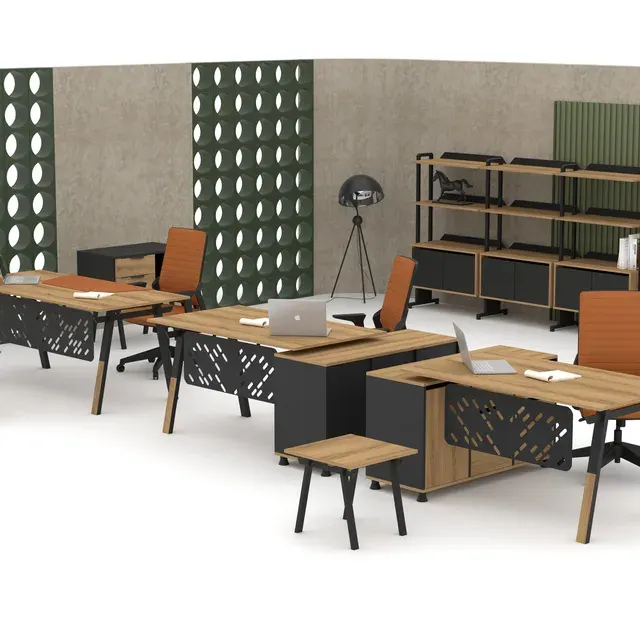
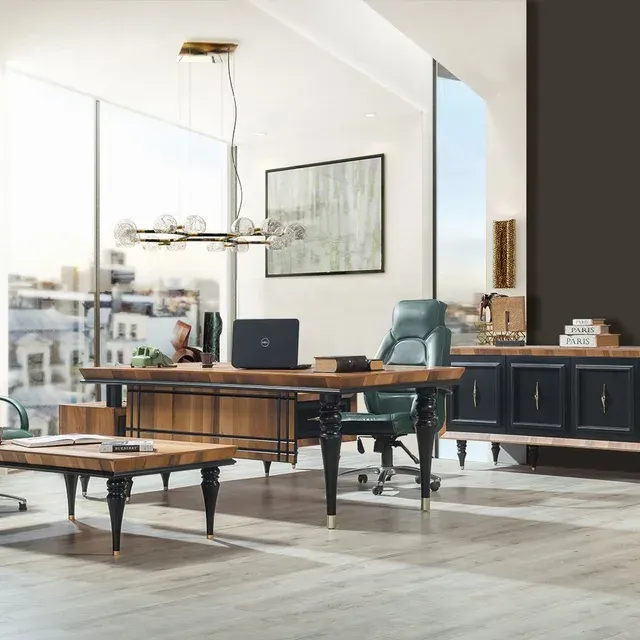
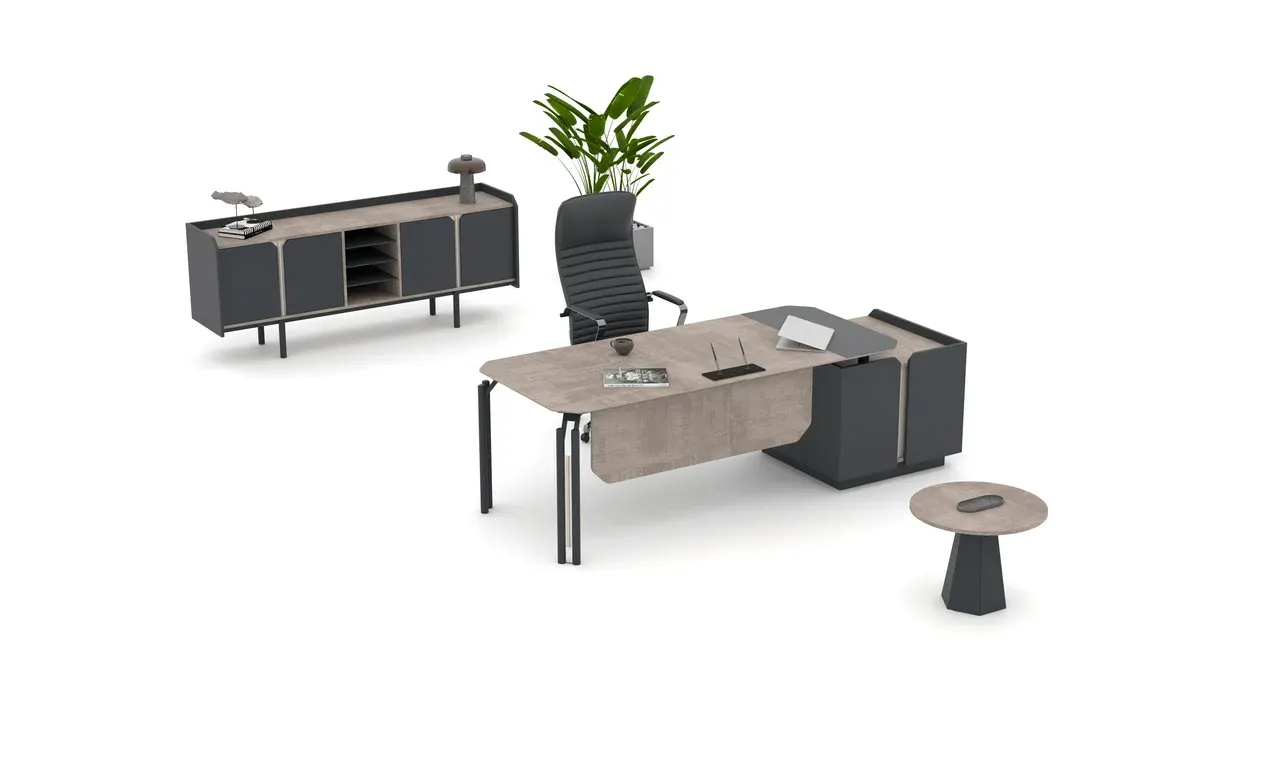
The product range covers all of an office's needs: executive and manager sets, staff sets and workstations, executive and ergonomic task chairs, office sofas and waiting-area seating, meeting tables, and storage systems. Corporate and plaza references together with factory capacity make it possible to run multi-unit orders and turnkey office projects from a single point.
If you would like to discuss your sourcing plan for your office in the Balkans, you can create a quotation request along with your dimensions and layout information. Contact: 0216 420 40 30 · [email protected]
Frequently Asked Questions
How long does shipping to the Balkans take?
The time varies according to the destination country, the order size, and the production schedule. Thanks to Turkey's geographic proximity, road transport to the Balkan countries is generally shorter than to distant European factories. The precise delivery time is stated in the quotation once your project and delivery address are finalized.
Do you provide installation service at our office abroad?
In many Balkan projects, working with a local installation team is the most practical solution, and the furniture is packaged accordingly. In large and complex corporate projects, the installation organization can be planned together as part of turnkey project management. The details are discussed at the quotation stage according to the scope of the project.
Can documents such as FSC or E1 be provided?
Fil Office production uses E1-class melamine-faced chipboard and quality materials. For the material compliance documents required in projects aimed at the EU market or for corporate projects, the requirement is clarified at the quotation stage so that the correct set of documents is prepared.
How do the remote quotation and payment process work?
The process begins with sharing the office dimensions and the floor plan; based on this data, a layout proposal and a price quotation are prepared. Color and veneer decisions are finalized through sample approval. Cross-border payment and shipping terms are discussed on a project basis.
In which language can we conduct communication?
You can communicate with us in Turkish, English, or Romanian; the online quotation form, email, and phone channels are all available in these languages. Because the technical details are supported by visual and numerical data—such as dimensions, floor plan, color code, and sample approval—misunderstandings arising from a language difference are minimized.
Related Products and Pages
Looking for the right furniture for your office?
Browse the full catalogue and add your favourites to your quote list.
Explore Products