
How to Plan an Office Furniture Budget? An Item-by-Item Cost Guide

An office furniture budget is planned not by adding up individual product prices but by building the item list correctly. An item left off the list comes back as a surprise cost in the middle of the project; an inflated one enlarges the budget in the very first round. This guide walks through how to structure an office furniture budget step by step, from per-person items to common areas, from prioritization to the contingency reserve.
The Skeleton of the Budget: The Per-Person Item List
The foundation of the calculation is the standard set per person. Three items are fixed for every employee: a work desk, an office chair, and personal storage. Multiplied by headcount, this set forms the largest and most predictable block of the budget; in most office projects, more than half of the total furniture budget comes from this block.
- Work desks: a single desk or a shared workstation? A workstation layout lowers both the footprint and the cost per item
- Office chair: it is the one product used eight hours a day; it is the last item whose quality should be compromised
- Personal storage: a mobile pedestal is the most common solution; for file-heavy roles, a cabinet allowance is added
Setting the headcount according to a 1-2 year growth projection rather than today's staff eliminates the risk of having to complete the set later from a different series.
Items That Don't Divide by Headcount: Common Areas and the Executive Floor
The second block covers areas that don't grow in proportion to headcount. When these items are forgotten, the budget balances on paper but runs a deficit at delivery.
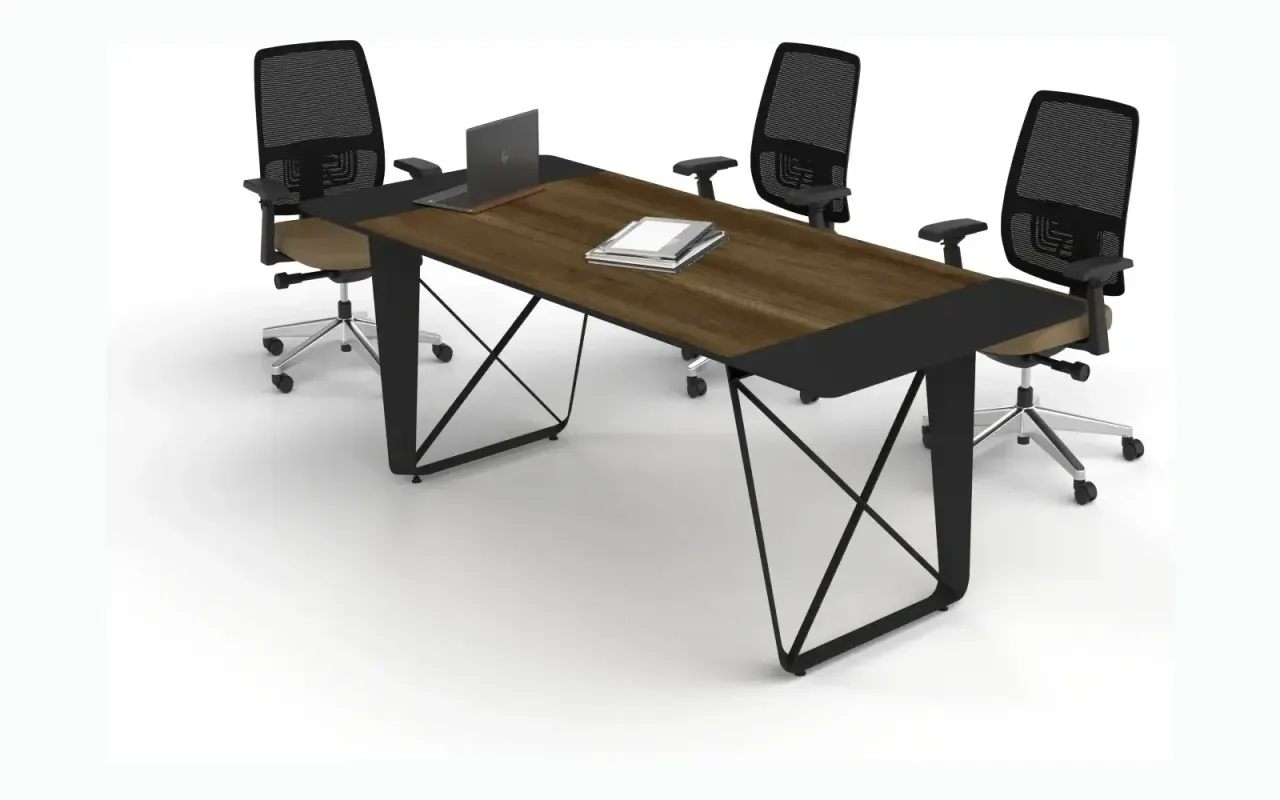
- Meeting room: a meeting table and as many conference chairs as there are seats
- Reception and waiting: a reception desk, waiting-area seating, and a guest hospitality area
- Executive floor: an executive suite and an executive chair; the most visible item of corporate image
- Shared storage and archive: filing cabinets, bookcases, and social-area furniture
In this block the quantities are small but the unit values are high; executive-floor items in particular can take up a proportionally larger share of the budget than expected.
Prioritization: Not All at Once, but in the Right Order
If the budget is limited, the right question is not "what do we cut" but "what do we postpone." The criterion for the order is intensity of use: a product touched eight hours every day comes before one used a few times a year.
- First priority: office chairs and work desks; ergonomics cannot be postponed
- Second priority: meeting and storage; the items that carry daily operations
- Third priority: waiting, social areas, and prestige upgrades; these can be moved to phase 2
The one condition for phased progress is series continuity: working with a manufacturer from the start ensures the same color and finish is still available in phase 2.
Contingency Reserve and Invisible Costs
Experienced budgets add a 10-15% contingency on top of the total. This reserve is not a luxury but the realism of the plan; dimensional revisions, additional quantities, and small completion items that emerge during the project are covered from it.
- Shipping and assembly: it can be a separate line depending on the supplier; at Fil Office, delivery and assembly within Istanbul are free
- Electrification and cable management: power modules and cable trays for workstations are missing from most budgets
- Post-delivery additions: extra desks and chairs for new hires; they must be completable from the same series
Warranty and service are part of the cost as well: a 2-year factory warranty and access to spare parts lower the product's true cost spread over the years.
Why Does the Price Become Clear with a Quote?
In corporate furniture purchasing, the price is determined by configuration, not by a retail tag: the cost of the same desk changes with size, material, and quantity, and the unit cost falls as the quantity rises. That is why serious suppliers prepare a project-specific quote instead of a list price.
In practice the process works like this: the item list and quantities are drawn up, the products you like are added to the quote basket, and the supplier prepares a total quote based on the configuration. At Fil Office this process runs with a manufacturer's advantage: dimensions and materials are adapted to the project, and the quote arrives as a single total from a single point of contact; by sharing your list of needs, you can pin down what your budget actually buys.
Frequently Asked Questions
Which item should receive the largest share of an office furniture budget?
The largest block of the total is the per-person sets: work desks, office chairs, and personal storage. Within the set, the most critical item is the office chair; skimping on the quality of a product used eight hours a day may look like savings in the short term, but it comes back as replacement and health costs.
What percentage of the budget should the contingency be, and when is it used?
Adding a 10-15% contingency on top of the total is a common and realistic practice. It is used for dimensional revisions, additional quantities that surface later, and small completion items that become clear at delivery; if the project finishes smoothly, it goes unspent and rolls over into the growth line.
How can I firm up my budget when there are no prices on the website?
By drawing up the item list with quantities and requesting a quote. In corporate purchasing, price varies with size, material, and quantity, so a list price would be misleading; a project-specific quote shows the total in one clear figure. When you add the products you like to the quote basket and share your needs, a total quote is prepared that maps directly onto your budget plan.
Looking for the right furniture for your office?
Browse the full catalogue and add your favourites to your quote list.
Explore Products