
Office Furniture Sourcing in Istanbul High-Rises: A Guide to Elevators, Traffic, and Executive Floors
If you're setting up an office in a tower or business center in Istanbul, choosing the furniture is only half the job; the other half is entirely logistics and organization. High floors, narrow elevators, heavy traffic, and building management rules turn placing the right product at the right time, undamaged, into a project in its own right. This guide brings together both the operational decisions that truly govern office furniture sourcing in the metropolis and the matter of executive-floor prestige.
What Really Complicates Sourcing in Istanbul: Not the Product, but the Building
Most corporate buyers begin the office-furnishing process thinking of it as a matter of choosing from a catalog; yet in Istanbul, the variable that decides the fate of the job is most often the building itself. Whether a large executive desk or a wide meeting table can be placed in a high-rise tower depends, before the product's quality, on the interior dimensions of the elevator door, the turning angle of the floor corridor, and the accessibility of the loading area.
That's why a serious sourcing process starts not with the showroom but with measurement. When the elevator cab dimensions, door width, floor-lobby maneuvering space, and door openings aren't determined in advance, even the most beautiful piece of furniture can get stuck on the landing. This is exactly where the most concrete advantage of working with a manufacturer like Fil Office emerges in the metropolis: the product can be designed to fit the building's reality.
An Executive Desk That Won't Fit in the Elevator: Knock-Down Production and Sectional Installation
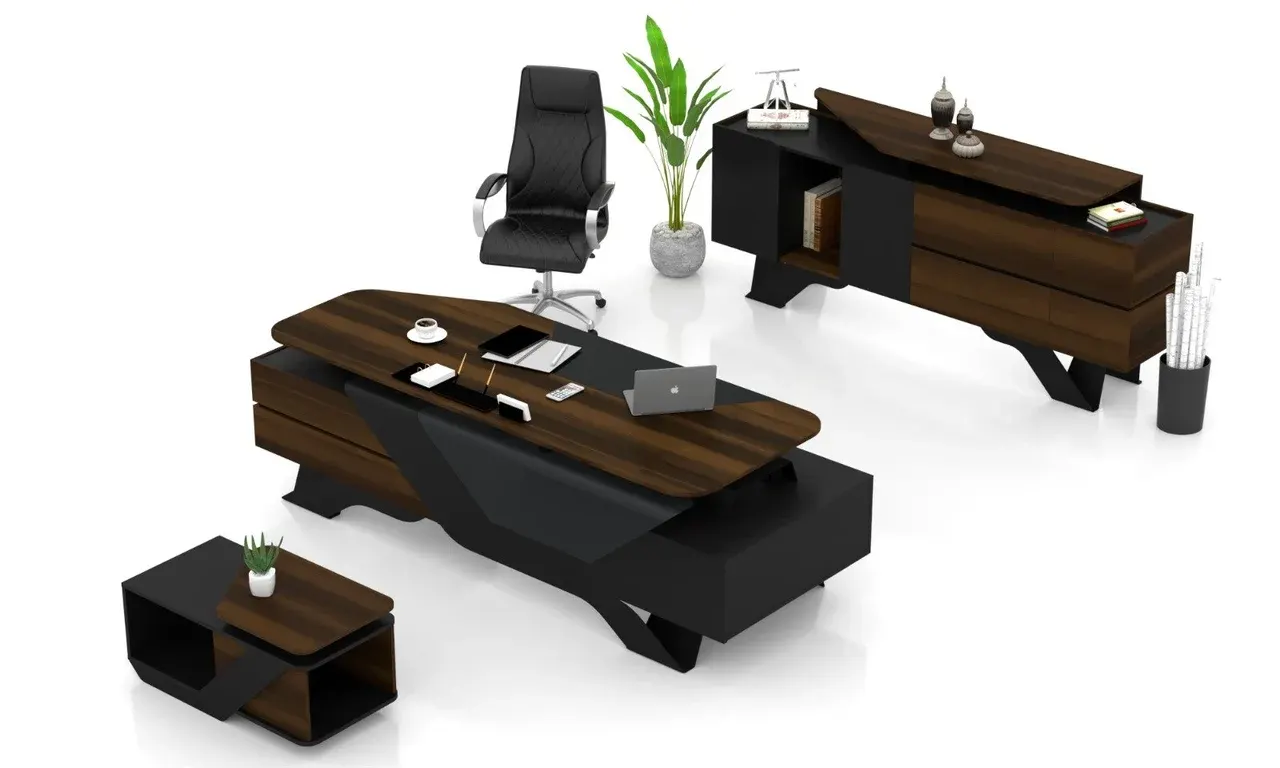
The most common crisis in Istanbul's high-rises is wide executive desks and large meeting tables not fitting in the elevator or through the door. When large executive and manager sets purchased as a single piece from standard catalogs can't be moved onto the floor, it means returns, reordering, and weeks of delay.
The manufacturer's solution eliminates this problem from the outset. Pieces whose dimensions would be problematic are produced in knock-down form; the desktop, leg assembly, and credenza modules are divided according to the elevator and door dimensions and assembled on the floor. This way, the transport constraint is overcome while visual integrity and sturdiness are preserved.
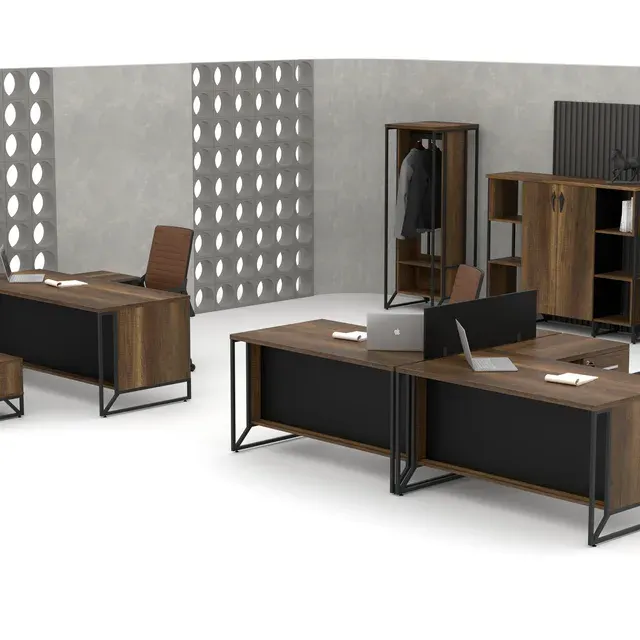
This approach applies not only to executive and manager sets, but also to modular staff sets and workstations, meeting tables, and large office cabinets. In Istanbul, modularity isn't a luxury but a design discipline mandated by on-floor transport.
- During the site survey, the elevator cab and door interior dimensions and floor-lobby maneuvering are measured
- Oversized pieces that won't fit are produced in knock-down form and assembled on the floor
- Tabletop, leg, and storage modules can be divided to size
- Visual integrity and structural sturdiness are preserved after installation
Traffic and Building Rules: Time-Windowed Delivery
Istanbul traffic isn't just a matter of comfort; it's a constraint that directly governs installation planning. Many towers and business centers permit goods receiving and installation only within specific time slots; use of the loading dock and service elevator may be limited during daytime business hours.
For this reason, corporate deliveries are usually scheduled for after hours, early morning, or the weekend. The goal is both to comply with the building's rules and to furnish a working office without disrupting its daily operations. In an active office, carrying out a noisy installation during the workweek is often not possible.
Whether this organization runs smoothly depends on the delivery and installation team being coordinated under a single roof—that is, under the same roof as the manufacturer. Bringing production, shipping, and installation together under one responsibility minimizes the risk of missing the time window.
Who Manages the Tower's Loading and Elevator Coordination?
In Istanbul, the unseen but decisive phase of corporate delivery is the coordination carried out with building management. When the loading dock reservation, the allocation of the service elevator at specific hours, security entry procedures, and corridor protection measures aren't planned in advance, even the best installation plan waits at the door.
Turnkey project management takes this burden off the customer. When a single line of responsibility runs from concept to production, from delivery to installation, the loading and elevator reservations with building management, the appointment times, and floor access are all resolved within that plan. The customer simply receives their office and doesn't have to deal with the logistical choreography.
Fil Office's tower and business-center references, together with its factory capacity, gain meaning precisely at this point: once the rhythm of recurring corporate deliveries is known, coordination turns from a surprise into a routine.
Two Shores, One Project: Simultaneous Setup on the European and Anatolian Sides
Multi-location companies in Istanbul most often have offices on both the European and Anatolian sides. A new headquarters and a branch office need to be furnished in the same corporate identity, with the same material and color standard—and usually on similar timelines, too.
Running a project on both shores simultaneously is a very different discipline from separate, individual purchases. Production from a single manufacturer guarantees color and finish consistency; the shipping plan is split into separate windows according to each shore's traffic and building rules, but proceeds under a single project management.
This way, executive chairs, staff sets and workstations, waiting-area seating, and meeting tables are delivered in the same quality and the same appearance at both locations. The standard doesn't degrade from one location to the next.
Executive-Floor Prestige: Balancing Comfort and Image
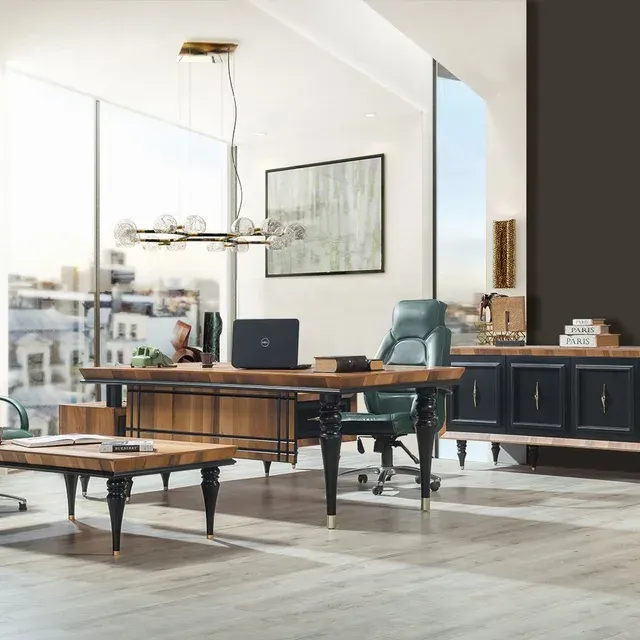
A tower's executive floors are the stage where a company first welcomes its guests. Here, furniture is not merely functional; it's an element of prestige that represents the company's seriousness and aesthetic language. In executive and manager sets, the texture of the material, the quality of the finish, and the refinement of the proportions leave a noticeable impression.
Yet prestige doesn't require compromising on comfort. Executives spend long hours at their desks; that's why executive chairs must also be strong in terms of ergonomic support, lumbar and neck support, and adjustability. With the right design, an executive chair both projects an authoritative presence and doesn't tire you out through the day.
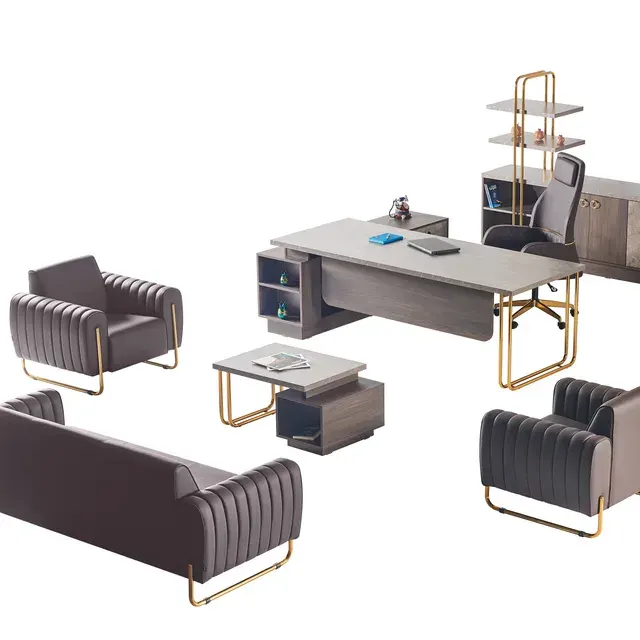
Reception and waiting areas are part of this language as well. Waiting-area seating and office sofas set the first impression given to a guest; the cohesion on the executive floor is completed with the same material and color sensibility from the corridor to the meeting room.
Phased Delivery on Large, Multi-Floor Projects
On large office projects spanning multiple floors, delivering everything at once is often neither possible nor sensible. The staff relocation schedule, the readiness of each floor, and the building's daily operations all require the installation to proceed in stages.
In phased delivery and installation, certain floors or departments are brought online first; as the office begins working, the setup of the remaining floors continues in a planned manner. This both keeps the relocation manageable and strengthens the dimensional and installation control of each phase separately.
On a project carried out with manufacturer capacity, continuity is preserved between phases: the same color, the same finish, and the same modular logic remain unchanged from the first floor to the last. As needs grow, additional modules can be produced to the same standard.
- Priority floors/departments are brought online first
- Each phase passes its own dimensional and installation control
- The color, finish, and module standard stays constant across all phases
- In case of growth, additional production to the same standard is possible
The Assurance the Right Supplier Provides in the Metropolis
Istanbul's operational challenges shouldn't push the quality of the furniture into the background. In heavily used offices, the choice of E1-standard chipboard, MDF, metal hardware, and durable finish/upholstery determines the furniture's performance over the years. Quality shouldn't become a bargaining chip under the pressure of fast delivery.
The manufacturer's assurance finds a concrete counterpart here: production tailored to size, color, and modularity, a 2-year warranty, after-sales service, and access to spare parts. In a tower environment, being able to quickly replace or reinforce a piece is a clear advantage over imported off-the-shelf products.
For companies setting up their office in Istanbul, running the process along a single line is the soundest approach. If you'd like to plan the site survey, production, logistics, and installation together, you can get in touch with the Fil Office team and receive a tailored quote for your corporate project.
Frequently Asked Questions
What happens if the executive desk we chose doesn't fit in the tower's elevator?
This situation is common in Istanbul's high-rises, and the solution is knock-down production. The manufacturer divides the desk into pieces according to the elevator cab and door dimensions; the tabletop, leg assembly, and storage modules are assembled on the floor. This way, large executive and manager sets are put in place while preserving their visual integrity and sturdiness. What matters is taking the measurements during the site survey and planning production accordingly.
Can installation be done after hours or on the weekend?
Yes—in Istanbul, the majority of corporate deliveries are scheduled for after hours, early morning, or the weekend. There are two reasons for this: many towers permit loading and service-elevator use only at specific hours, and you also need to avoid disrupting the daily workings of an active office. The delivery and installation schedule is set together according to the building's rules and your operations.
Who handles the loading dock and elevator coordination at the tower?
In turnkey project management, this coordination is undertaken by the supplier. The loading dock reservation with building management, the allocation of the service elevator at specific hours, security entry procedures, and corridor protection are planned in advance. When production, shipping, and installation are brought together under one responsibility, the customer doesn't have to deal with this logistical organization piece by piece.
Can furniture be delivered in stages in a multi-floor office?
Yes. On large, multi-floor projects, phased delivery and installation is usually the soundest method. Priority floors or departments are brought online first, and as the office begins working, the setup of the remaining floors continues in a planned manner. On projects carried out with manufacturer capacity, the same color, finish, and module standard is preserved across all phases; if growth occurs later, additional modules can be produced to the same standard.
Can a project be run simultaneously for branch offices on both sides of Istanbul?
Yes—offices on the European and Anatolian sides can be furnished simultaneously under a single project management. Production from a single manufacturer guarantees color and finish consistency at both locations. The shipping plan is split into separate windows according to each shore's traffic and building rules, but the project is managed as a whole, so the corporate identity doesn't degrade from one location to the next.
Related Products and Pages
Looking for the right furniture for your office?
Browse the full catalogue and add your favourites to your quote list.
Explore Products